Introduction & Summary
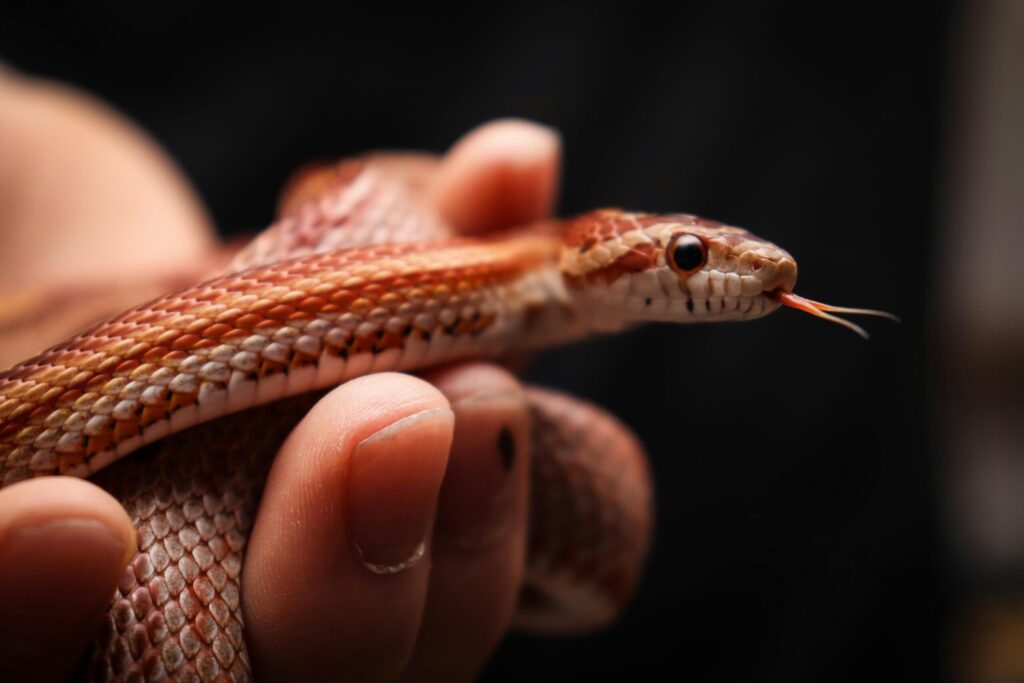
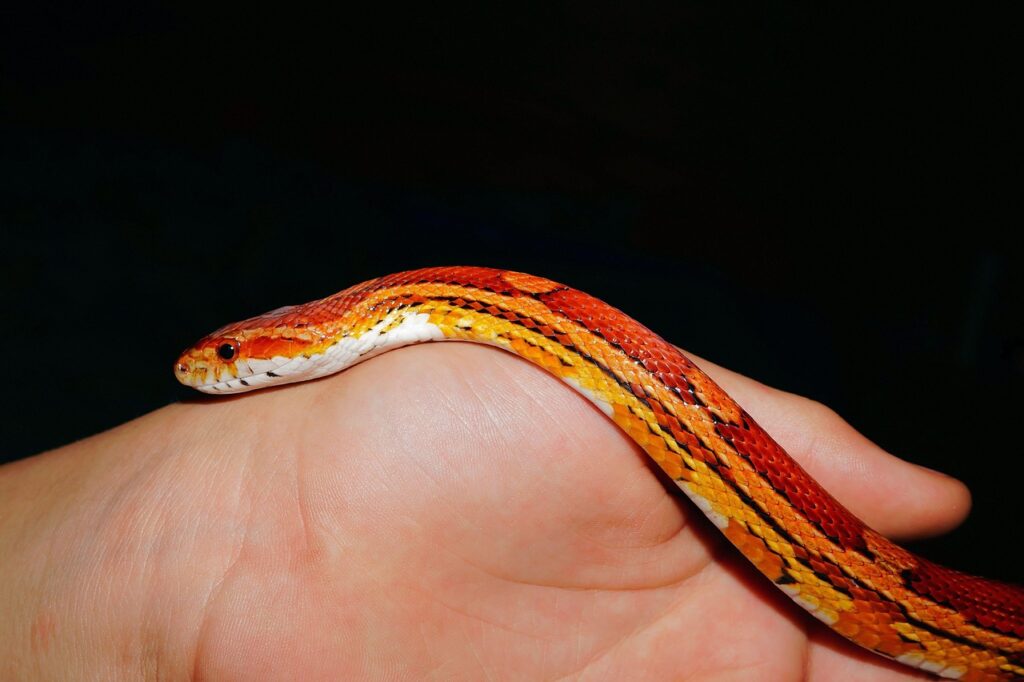
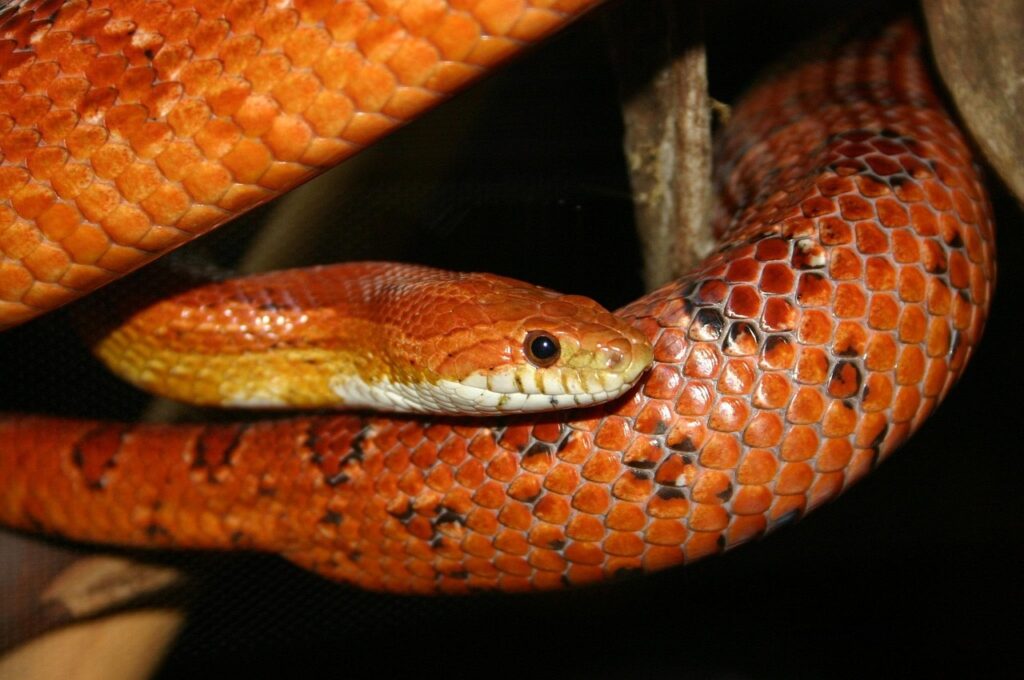
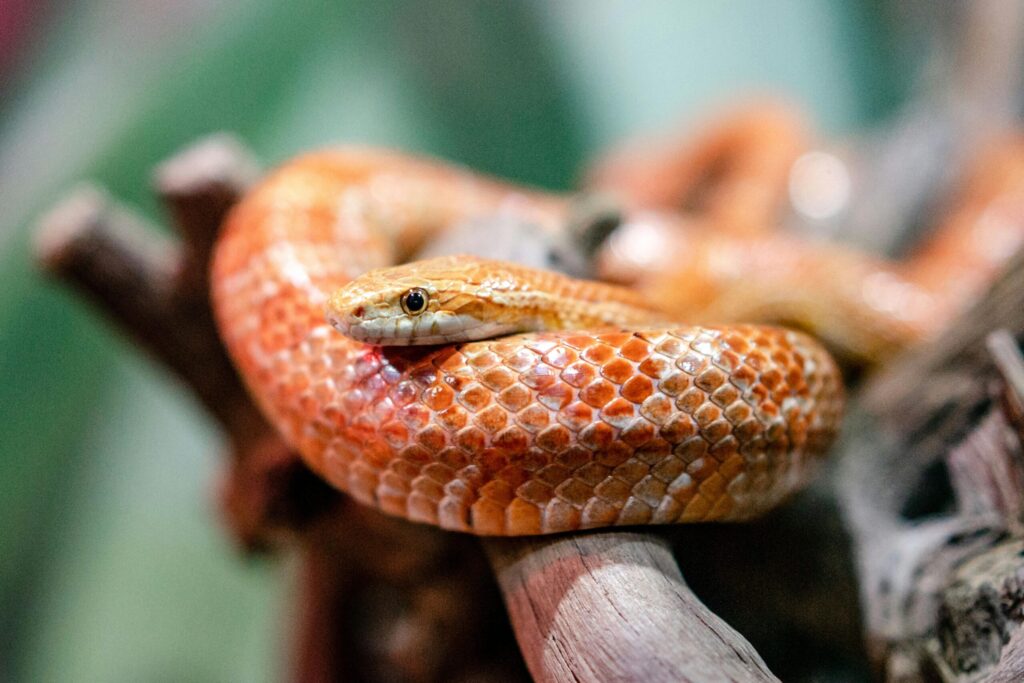
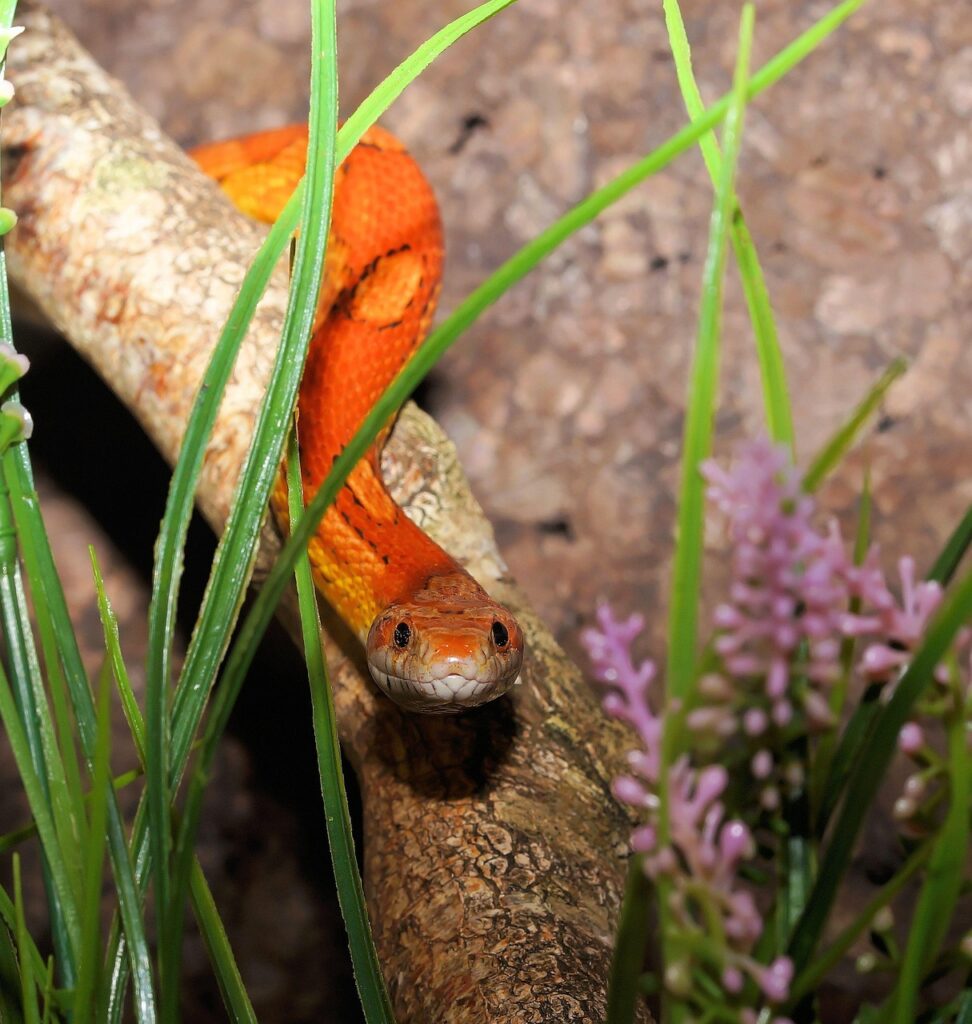
Corn snakes (Pantherophis guttatus) are one of the most popular pet snakes—and for very good reason. Native to the southeastern United States, these non-venomous, docile snakes are relatively easy to care for, making them a favorite for both beginners and experienced keepers. Adults typically grow to 3–5 feet (90–150 cm) in length and, with proper care, can live 15–20 years or even longer in captivity. Their gentle temperament, manageable size, and striking color morphs make them ideal for a home terrarium.
Husbandry Requirements
Here are the key considerations for providing optimal care for corn snakes:
Enclosure Size & Security
- Juveniles / Hatchlings: Can be kept in smaller tubs or Exo Terra–style tanks.
- Adults: Minimum recommended tanks size is a front opening 40-gallon tank or a 4′ × 2′ × 2′ for larger individuals so that they can fully stretch out.
- The enclosure must be escape-proof, with a secure lid or tight-fitting door, as corn snakes are quite good at slipping out.
Substrate
Selecting the right substrate is critical:
Good options:
- Coconut husk / coconut fiber
- Soil-based mixes (e.g., organic topsoil mixed with play sand and leaf litter)
- Paper-based options (paper towels, newspaper) or reptile carpet for simpler maintenance
- Zilla Jungle Mix
- BioDude Terra Firma
Avoid:
- Pine or cedar shavings, which contain oils harmful to snakes’ respiratory systems.
- Substrates like sand or corncob can pose impaction risks if accidentally ingested.
- Kitty litter or treated sand as it contains harmful chemicals.
Humidity & Water
- Maintain an ambient humidity of around 40–60%, with many sources recommending 40–50% as a comfortable baseline.
- During shedding, raising humidity to the upper end (or slightly higher) helps promote a clean, full shed.
- Provide a humid hide, e.g., a hide box filled with moist sphagnum moss so your snake can access a more humid microclimate.
- Always include a water bowl large enough for soaking, and change the water daily or whenever it becomes soiled.
Heating & Temperature
- Create a thermal gradient: one warm “basking” side and one cooler side.
- Common target temperatures:
- Warm side / basking spot: ~ 85-90 °F (29–30 °C) per many care guides. This can be accomplished with a Double Dome Heat Lamp using Flood Lights and a Dimmer.
- Cool side: around 75°F (24°C); at night, some drop to the lower 60s–mid 70s is acceptable.
- Use a thermostat to regulate your heat source — very important to prevent overheating.
- Do not use hot rocks or under-tank heat mats — they pose severe burn risks.
- Alternative Heating options: ceramic heat emitters, or heat tape (depending on your setup).
Lighting
- Corn snakes do not strictly require UVB lighting, but low-level UVB (like a 5% UVB bulb) can have health benefits (e.g., immune system support). You can purchase a variable level UVB LED fixture here which works with all reptiles when properly installed and calibrated.
- Provide a day/night lighting cycle, typically 12 hours of light / 12 hours dark, to mimic natural rhythms.
- Replace UVB bulbs every ~6 months (or per manufacturer), since UV output diminishes over time.
Enrichment & Hides
- Provide at least two hides: one on the warm side, another on the cool side, so the snake can thermoregulate while feeling secure.
- Include climbing opportunities: branches, artificial foliage, logs — many corn snakes climb readily.
- Add decor for enrichment: leaf litter, humid hides, sphagnum moss — these support natural behaviors like burrowing and exploration.
Dietary Needs
- Corn snakes are carnivores, feeding primarily on rodents in captivity.
- Use appropriately sized prey: prey should be about as wide as the snake’s widest part.
- Feeding schedule:
- Hatchlings / juveniles: about every 5–7 days (e.g., pinkie or fuzzy mice).
- Adults: every 7–10 days is typical. (small adult mice)
- Prefer frozen-thawed rodents over live prey as it is safer for your snake and easier to manage.
- Always fully thaw frozen prey and warm it to room/snake-body temperature before offering.
- Use feeding tongs or a separate feeding container if you’re concerned about substrate ingestion. Loose substrates like aspen or mulch can be accidentally ingested and cause impaction.
- Avoid handling for 24–48 hours after feeding to reduce risk of regurgitation.
Common Health Issues & Prevention
Here are some of the main health risks corn snakes can face, and how to mitigate them:
- Respiratory infection
- Signs: wheezing, mucus, bubbles from mouth/nose.
- Causes: too cold, too damp environment.
- Prevention: maintain correct temperature gradient, avoid overly damp substrate or high humidity, keep the enclosure clean, and monitor with a hygrometer.
- Scale rot / dermatitis
- Signs: blisters, scabs, crusting on skin.
- Causes: dirty or too-damp substrate, burns from improper heating, poor hygiene.
- Prevention: maintain clean, dry areas; ensure your heat source is safe (no hot rocks); spot-clean regularly and deep-clean periodically.
- Stomatitis (“mouth rot”)
- Signs: white/cheesy substance in mouth, sores, loss of appetite.
- Causes: unsanitary habitat, poor husbandry (wrong temps, humidity), stress.
- Prevention: good sanitation, proper thermal control, and timely veterinary care.
- Parasites – mites / ticks
- Signs: visible mites, skin irritation, restlessness.
- Prevention: quarantine new animals, maintain clean habitat, perform regular health checks, and clean/ disinfect enclosure between animals.
- Problems shedding (dysecdysis)
- Signs: incomplete sheds, retained eye caps.
- Causes: low humidity, lack of a proper humid hide, or poor hiding spots.
- Prevention: provide a humid hide (with moistened sphagnum moss), monitor and adjust humidity, mist selectively, and ensure hides are appropriately sized and placed.
What to Avoid: Common Mistakes
To ensure your corn snake thrives, here are pitfalls to avoid:
- Substrate mistakes
- Avoid pine, cedar, sand, corncob, or very dusty beddings.
- Don’t feed directly on loose substrate with particles — risk of ingestion and impaction.
- Dangerous heating
- Never use hot rocks.
- Avoid uncontrolled heat sources: always use a thermostat.
- Improper lighting
- Don’t leave lights on constantly; that disrupts natural day/night cycles.
- Avoid red light “night bulbs” unless specifically designed — many keepers note they can disturb behavior and sleep.
- Feeding issues
- Don’t feed prey items that are too large — they should be no wider than the snake’s body.
- Avoid live prey if possible: frozen-thawed is safer and cleaner.
- Don’t handle your snake too soon after feeding — risk of regurgitation.
- Poor care practices (Suboptimal Husbandry)
- Skipping regular cleaning: waste should be removed promptly, and the enclosure should be disinfected periodically.
- Ignoring humidity or hiding needs: without a humid hide or proper microclimate, shedding and health may suffer.
Conclusion
Corn snakes make excellent pets because of their relatively simple care, gentle temperament, and longevity. With the right setup—a secure, appropriately sized enclosure, correct substrate, heating gradient, sufficient humidity, and enrichment—you’ll set up your snake for a healthy and happy life. Regular feeding, clean water, and careful monitoring for health issues round out the basics.
As always, consult a reptile-experienced veterinarian if you notice any signs of illness. Learning and adjusting your care as you go will make both you and your snake more confident and comfortable.
If your looking to adopt a snake consider visiting your local reptile rescue. We have comprised a comprehensive list of reptile rescues in the United States here.
Sources:
- Hills, Ellie. “Corn Snake (Pantherophis Guttatus) Care Sheet.” Reptiles and Research, Reptiles and Research, 1 Sept. 2025, reptilesandresearch.org/care-sheets/corn-snake-pantherophis-guttatus-care-sheet?utm_source. Accessed 18 Nov. 2025
- Person, and Zilla. “Husbandry Handbook: Corn Snake – Panthertophis Guttata.” Husbandry Handbook: Corn Snake – Panthertophis Guttata, www.zillarules.com/information/care-sheets/corn-snake?utm_source. Accessed 18 Nov. 2025.
- “Corn Snake Care Sheet.” PetMD, www.petmd.com/reptile/corn-snake-care-sheet?utm_source. Accessed 18 Nov. 2025.
- ©ReptiFiles® — Where Better Reptile Care Begins — 2020, reptifiles.com/wp-content/uploads/2020/12/Corn-Snake-Care-Sheet-PDF.pdf. Accessed 18 Nov. 2025.