Starting your herpetological journey can be exciting and rewarding. Choosing the right snake is crucial for a successful and enjoyable experience. Here are the top 5 best pet snakes for beginner keepers that are known for their ease of care, temperament, and adaptability.
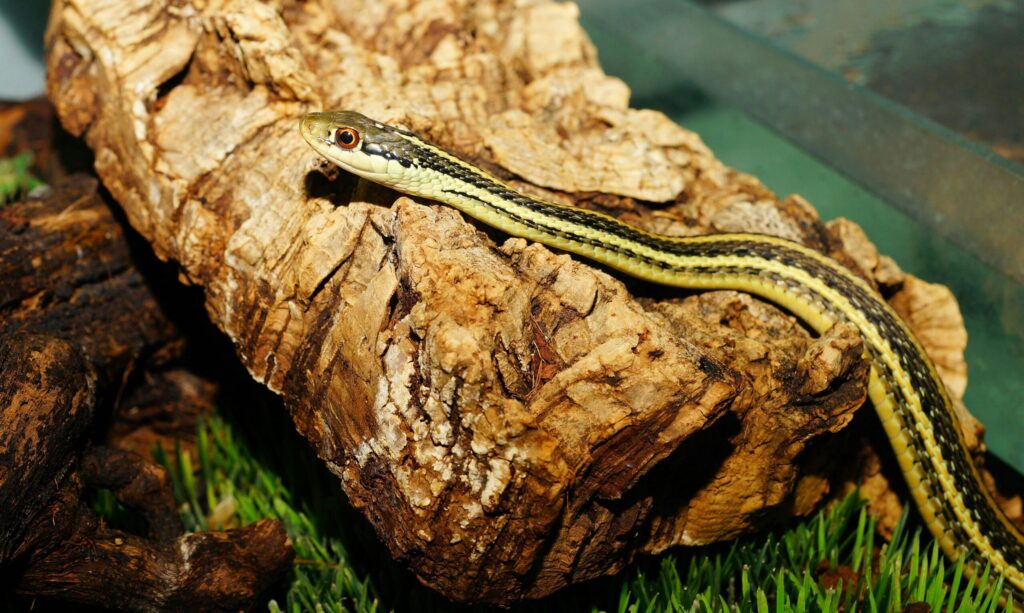
#5 Garter Snake | Best Pet Snakes For Minimalist Setup
Garter snakes are among the most common backyard snakes and make excellent first pets due to their hardy nature. They also thrive in a simple enclosure with a shallow water dish and a hiding spot. Unlike most snakes, they are omnivorous, feeding on fish, insects, and sometimes small rodents, which makes their diet versatile. Additionally, their active behavior and manageable size (usually 18-30 inches) make them great for beginners who want a lively yet easy-to-care-for snake.
Care Requirements: Moderate humidity, a spacious enclosure, and a diet of suitable frozen thawed prey. Regular cleaning and gentle handling are essential.
What Makes Them Great: Hardy, inexpensive, and tolerant of handling, Garter snakes are perfect for beginners looking to learn about snake caregiving without too many complexities. For a complete care guide on Garter Snakes please use the following link.
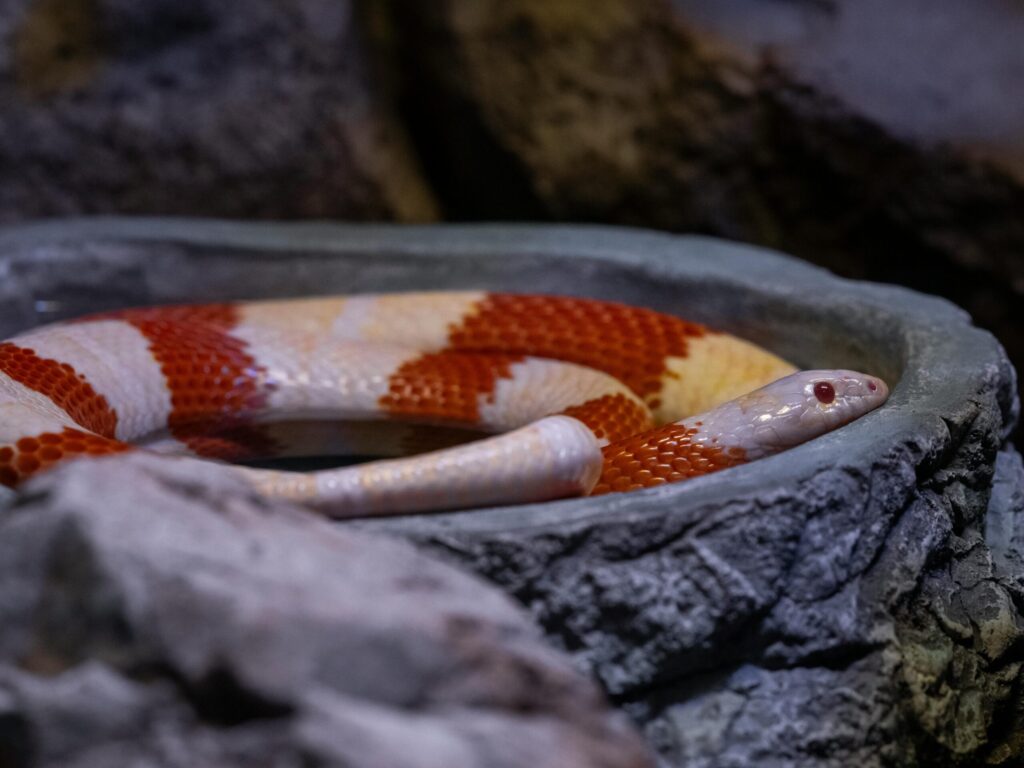
#4 Milk Snake | Best Pet Snakes with Multiple Subspecies
Milk snakes are colorful, striking, and easy to care for, making them incredibly popular among new herpetologists. Similarly, their diet mainly consists of small rodents, and they are relatively hardy with a calm demeanor. Additionally, they thrive in a well-ventilated terrarium with hiding spots and a secure lid.
Care Requirements: A temperature gradient of 75-85°F is key. Furthermore, they need low to moderate humidity, and a diet of appropriately-sized frozen/thawed mice. They enjoy a secure environment and minimal handling at first.
What Makes Them Great: Their vibrant appearance and docile nature make them a captivating yet manageable choice for beginners, also making them a great contender for this list.

#3 Corn Snake | Most Interactive
Often regarded as the quintessential beginner snake, the corn snake is particularly known for its gentle temperament and ease of care. Furthermore, they come in a wide range of color morphs, adding visual interest to their care setup. They are primarily nocturnal, feeding on small rodents, and are quite forgiving if husbandry is slightly off.
Care Requirements: They also thrive in a temperature gradient of 70-85°F, moderate humidity, with a diet of frozen/thawed mice or small rats depending on their age. Additionally, they require a relatively simple setup with a hiding spot and a water dish.
What Makes Them Great: Above all else, their calm disposition, manageable size (about 4-6 feet), and adaptability make them ideal for first-time snake owners.
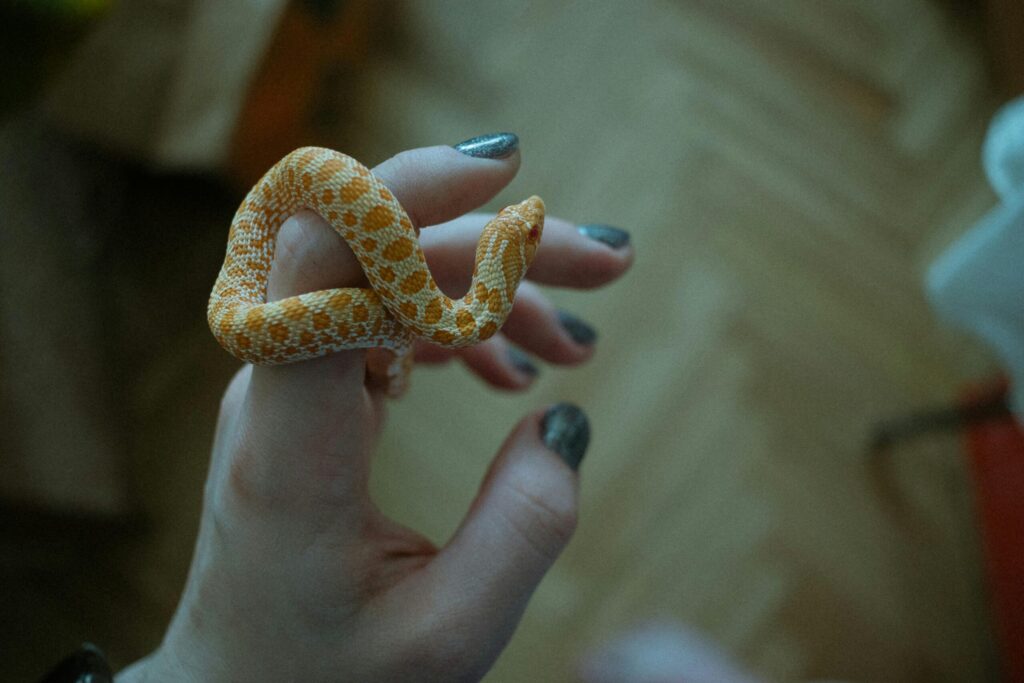
#2 Western Hognose Snake | Best Pet Snakes For Small Living
Known for their distinctive upturned snouts and expressive behaviors, Western Hognose snakes are curious and friendly and great for apartment living. They are small (up to 2 feet), easy to handle, and also have straightforward care requirements. They prefer a dry environment with sand or soil substrate and are primarily insectivorous, though they readily accept small rodents.
Care Requirements: These creatures thrive in warm temperatures around 75-85°F. Additionally they require low humidity, and an enclosure with burrowing substrate. They feed mostly on frozen/thawed prey.
What Makes Them Great: Their unique appearance and manageable size, coupled with their generally docile nature, attract beginner herpetologists.
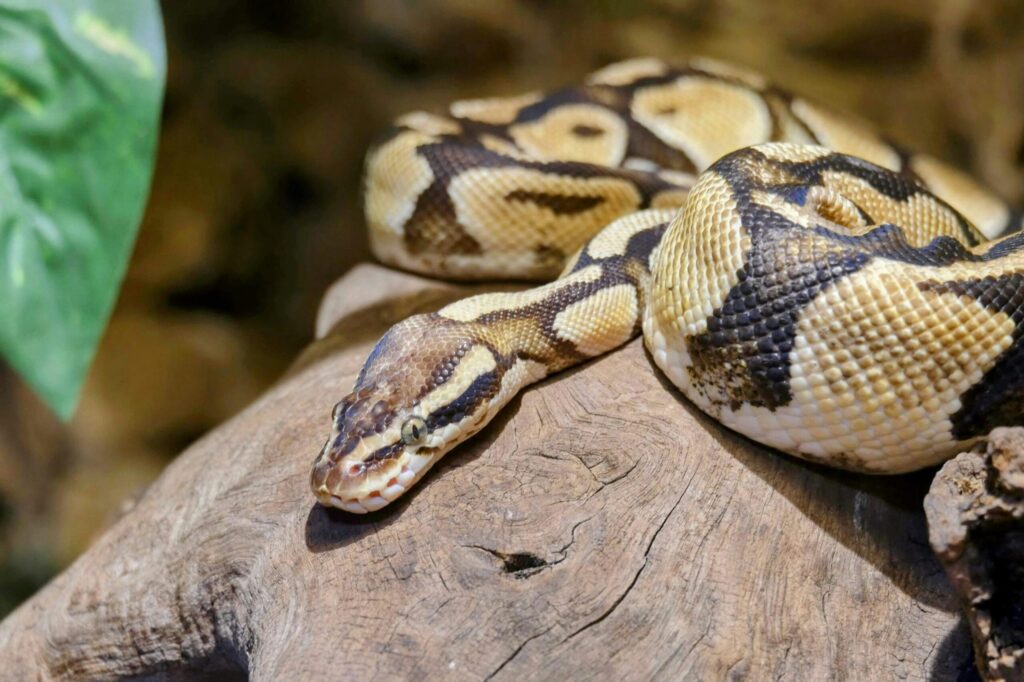
#1 Ball Python | Best Pet Snakes Overall
Topping the list is the renowned Ball Python. Also known for their calm temperament and impressive variety of morphs, they are arguably the most popular beginner snake. Comparatively, they are relatively small (3-5 feet), easy to handle, and hardy. Furthermore, they thrive in a secure enclosure with a consistent temperature and humidity level.
Care Requirements: Similar to some of the species above they thrive in a temperature gradient of 78-80°F during the day, 70-75°F at night, with humidity around 50-60%. Additionally, they eat pre-killed mice or rats roughly once a week, and require minimal handling.
What Makes Them Great: Although pythons often get a bad wrap, their gentle nature, manageable size, and minimal care needs make them an ideal first pet for anyone interested in herpetology. For an in depth guide to Ball Python Care please visit the following link.
In Summary:
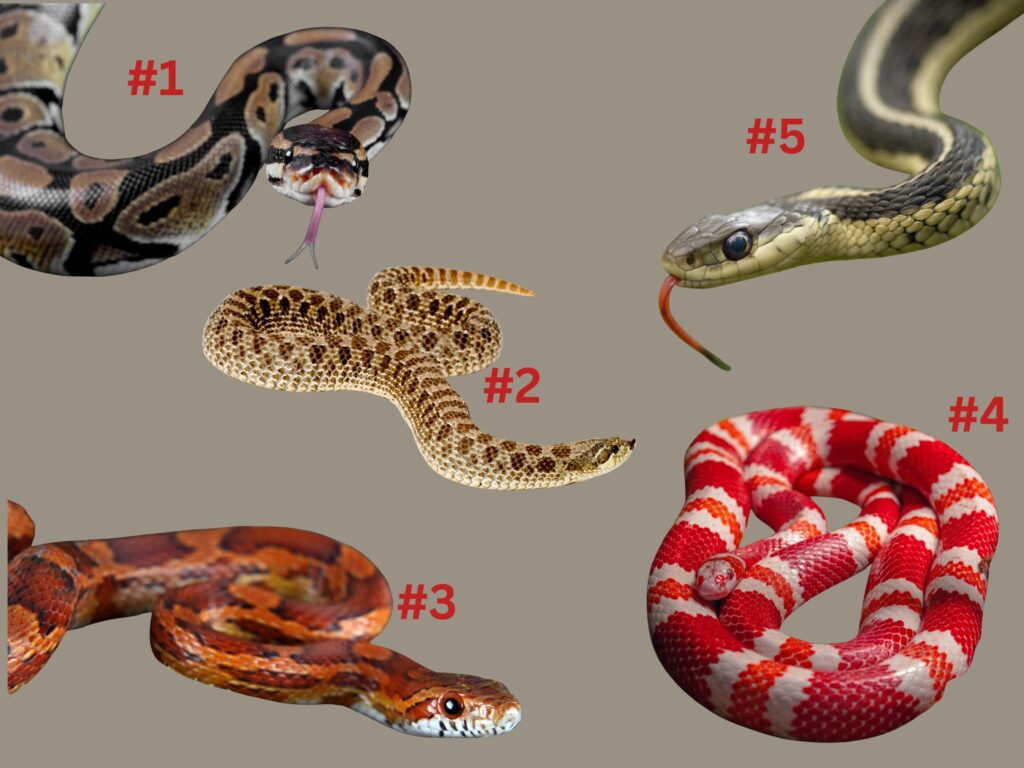
Choosing your very first snake doesn’t have to be overwhelming or intimidating. On the contrary, the Garter Snake, Milk Snake, Corn Snake, Western Hognose, and Ball Python each offer manageable care routines and fascinating personalities, making them perfect companions for those taking their first steps into the exciting world of herpetology. If you’re looking to adopt a new pet snake then consider checking your local reptile rescue for available pets by using our comprehensive directory of exotic pet rescues found here. Happy herping!
Sources:
- Mullinax, Mariah Healey. “Garter Snake (Thamnophis spp.) Care Sheet.” ReptiFiles, https://reptifiles.com/garter-snake-care-sheet/. Accessed 29 Apr. 2025.
- McLeod, Lianne. “Metabolic Bone Disease in Reptiles.” The Spruce Pets, Dotdash Meredith, 27 Mar. 2022, https://www.thesprucepets.com/metabolic-bone-disease-in-reptiles-1237237. Accessed 29 Apr. 2025.
- “Common Diseases of Pet Snakes.” VCA Animal Hospitals, https://vcahospitals.com/know-your-pet/snakes-diseases. Accessed 29 Apr. 2025.
- PetMD Editorial. “Skeletal Deformity in Amphibians.” PetMD, 14 Aug. 2008, https://www.petmd.com/reptile/conditions/musculoskeletal/c_rp_am_metabolic_bone. Accessed 29 Apr. 2025.
- “Garter Snake.” RSPCA, https://www.rspca.org.uk/adviceandwelfare/pets/other/gartersnake. Accessed 29 Apr. 2025.
- Merck Veterinary Manual. “Disorders and Diseases of Reptiles.” Merck Veterinary Manual, https://www.merckvetmanual.com/all-other-pets/reptiles/disorders-and-diseases-of-reptiles. Accessed 29 Apr. 2025.
- The Bio Dude. “Do Substrates Cause Impaction in Reptiles?” The Bio Dude, 4.7 years ago, https://www.thebiodude.com/blogs/reptile-and-amphibian-husbandry-basics/does-substrates-cause-impaction-in-reptiles. Accessed 29 Apr. 2025.
- Ball Python (Python Regius), reptifiles.com/wp-content/uploads/2020/11/Ball-Python-Care-Sheet-PDF-1.pdf. Accessed 22 Apr. 2025.
- “Owning a Pet Snake: VCA Animal Hospitals.” Vca, vcahospitals.com/know-your-pet/snakes-owning. Accessed 22 Apr. 2025.
- “Common Diseases of Pet Snakes: VCA Animal Hospitals.” Vca, vcahospitals.com/know-your-pet/snakes-diseases. Accessed 22 Apr. 2025.
- ©ReptiFiles® — Where Better Reptile Care Begins, reptifiles.com/wp-content/uploads/2021/12/Milksnake-Care-Sheet-PDF.pdf. Accessed 19 Nov. 2025.
- “Milk Snake Care Sheet.” PetMD, www.petmd.com/reptile/milk-snake-care-sheet?utm_source. Accessed 19 Nov. 2025.
- Person, and Zilla. “Husbandry Handbook: Milk Snake – Lampropeltis Triangulum Ssp..” Husbandry Handbook: Milk Snake – Lampropeltis Triangulum Ssp., www.zillarules.com/information/care-sheets/milk-snake?utm_source. Accessed 19 Nov. 2025.
- Supply, Reptile. “How to Care for Your Milksnake.” ReptileSupply.Com, ReptileSupply.com, 19 July 2021, reptilesupply.com/blogs/snake-care-sheets/how-to-care-for-your-milksnake. Accessed 19 Nov. 2025.
- “Western Hognose Care Sheet and Maintenance.” The Bio Dude, www.thebiodude.com/blogs/snake-caresheets/western-hognose-care-sheet-and-maintenance?srsltid=AfmBOoomcuMEf8gIuv_EQamytOGKCwPYYFC7c3OrBw7shf9Z5az6ll2M. Accessed 17 Nov. 2025.
- “Hognose Snake Enclosure Size Guidelines.” ReptiFiles®, 23 Oct. 2024, reptifiles.com/heterodon-hognose-snake-care/hognose-snake-enclosure-size/. Accessed 17 Nov. 2025
- “Common Hognose Snake Diseases & Other Health Info: Reptifiles.” ReptiFiles®, 19 Aug. 2020, reptifiles.com/heterodon-hognose-snake-care/hognose-snake-health/. Accessed 17 Nov. 2025
- “What Do Hognose Snakes Eat?: Reptifiles’ Hognose Care Guide.” ReptiFiles®, 12 June 2024, reptifiles.com/heterodon-hognose-snake-care/what-do-hognose-snakes-eat/. Accessed 17 Nov. 2025
- Hills, Ellie. “Corn Snake (Pantherophis Guttatus) Care Sheet.” Reptiles and Research, Reptiles and Research, 1 Sept. 2025, reptilesandresearch.org/care-sheets/corn-snake-pantherophis-guttatus-care-sheet?utm_source. Accessed 18 Nov. 2025
- Person, and Zilla. “Husbandry Handbook: Corn Snake – Panthertophis Guttata.” Husbandry Handbook: Corn Snake – Panthertophis Guttata, www.zillarules.com/information/care-sheets/corn-snake?utm_source. Accessed 18 Nov. 2025.
- “Corn Snake Care Sheet.” PetMD, www.petmd.com/reptile/corn-snake-care-sheet?utm_source. Accessed 18 Nov. 2025.
- ©ReptiFiles® — Where Better Reptile Care Begins — 2020, reptifiles.com/wp-content/uploads/2020/12/Corn-Snake-Care-Sheet-PDF.pdf. Accessed 18 Nov. 2025.