Introduction
Milk snakes (genus Lampropeltis) are among the most popular and visually striking reptiles in the exotic pet trade. Renowned for their vibrant coloration, manageable size, and generally docile temperament, milk snakes are suitable for both novice and experienced reptile keepers. However, their care is nuanced, requiring attention to environmental parameters, dietary needs, and preventive health practices to ensure a long, healthy life. This guide provides an exhaustive, evidence-based overview of milk snake husbandry, dietary management, veterinary care, common health issues, and subspecies-specific requirements, integrating the latest research and best practices from leading herpetological sources.
1. Milk Snake Overview: Temperament, Size, Lifespan, and Appearance
Milk snakes are non-venomous colubrids native to North, Central, and parts of South America, with a range extending from southern Canada through much of the United States and into Mexico and Central America. Their adaptability to diverse habitats—woodlands, grasslands, rocky outcrops, and agricultural areas—has contributed to the evolution of over 20 recognized subspecies, each with unique coloration and behavioral traits.
Temperament:
Milk snakes are generally docile, making them excellent pets for beginners. While hatchlings and juveniles may display defensive behaviors such as tail rattling, musking, or rapid flight, regular, gentle handling typically results in a calm, manageable adult. Notably, Honduran and Nelson’s milk snakes are especially known for their placid nature, while some Eastern and Sinaloan individuals may be more secretive or shy.
Size:
Adult milk snakes range from 2 to 5 feet (60–150 cm), depending on subspecies. Eastern and Mexican milk snakes are typically on the smaller end (2–3 feet), while Honduran and Black milk snakes can reach 4–6 feet in length.
Lifespan:
With proper care, milk snakes routinely live 15–20 years in captivity, and some individuals have been documented to exceed 20 years.
Appearance:
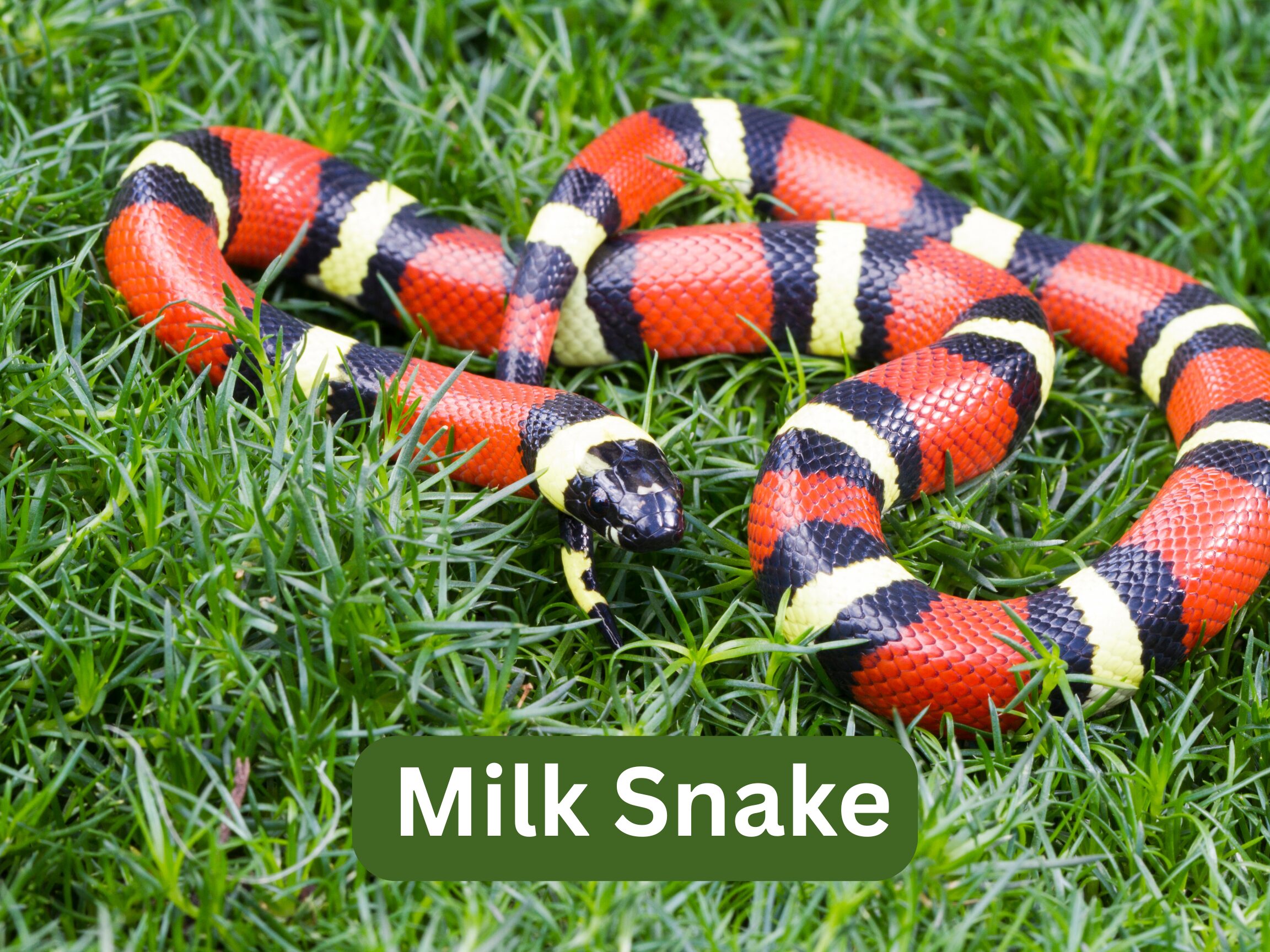
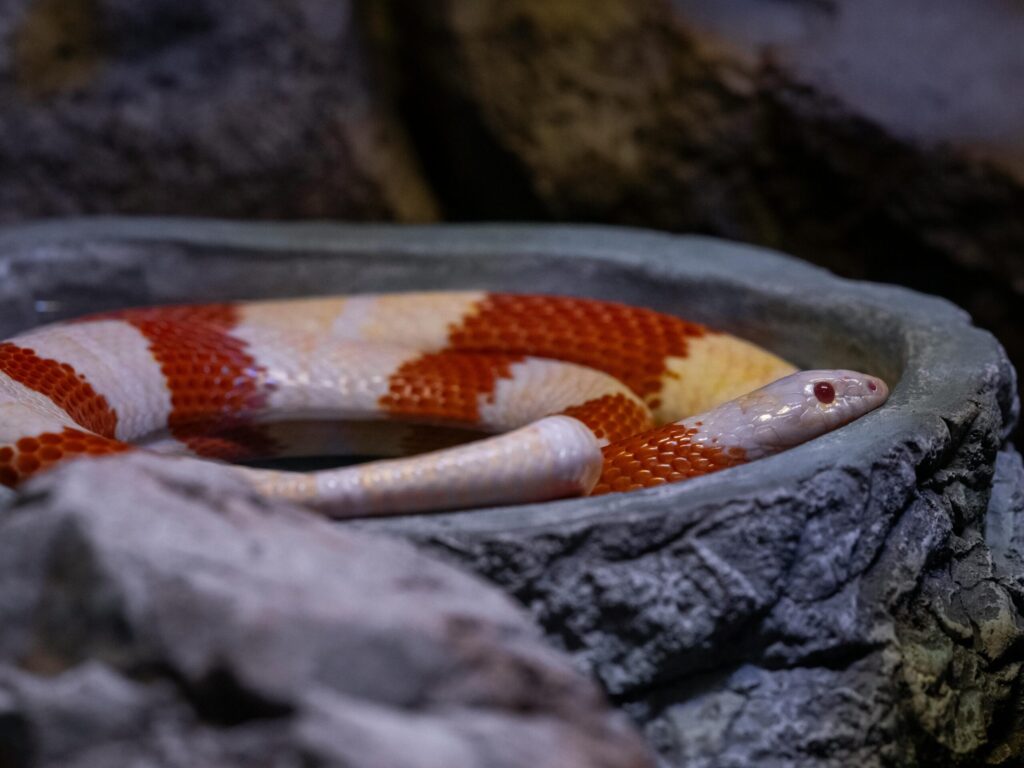
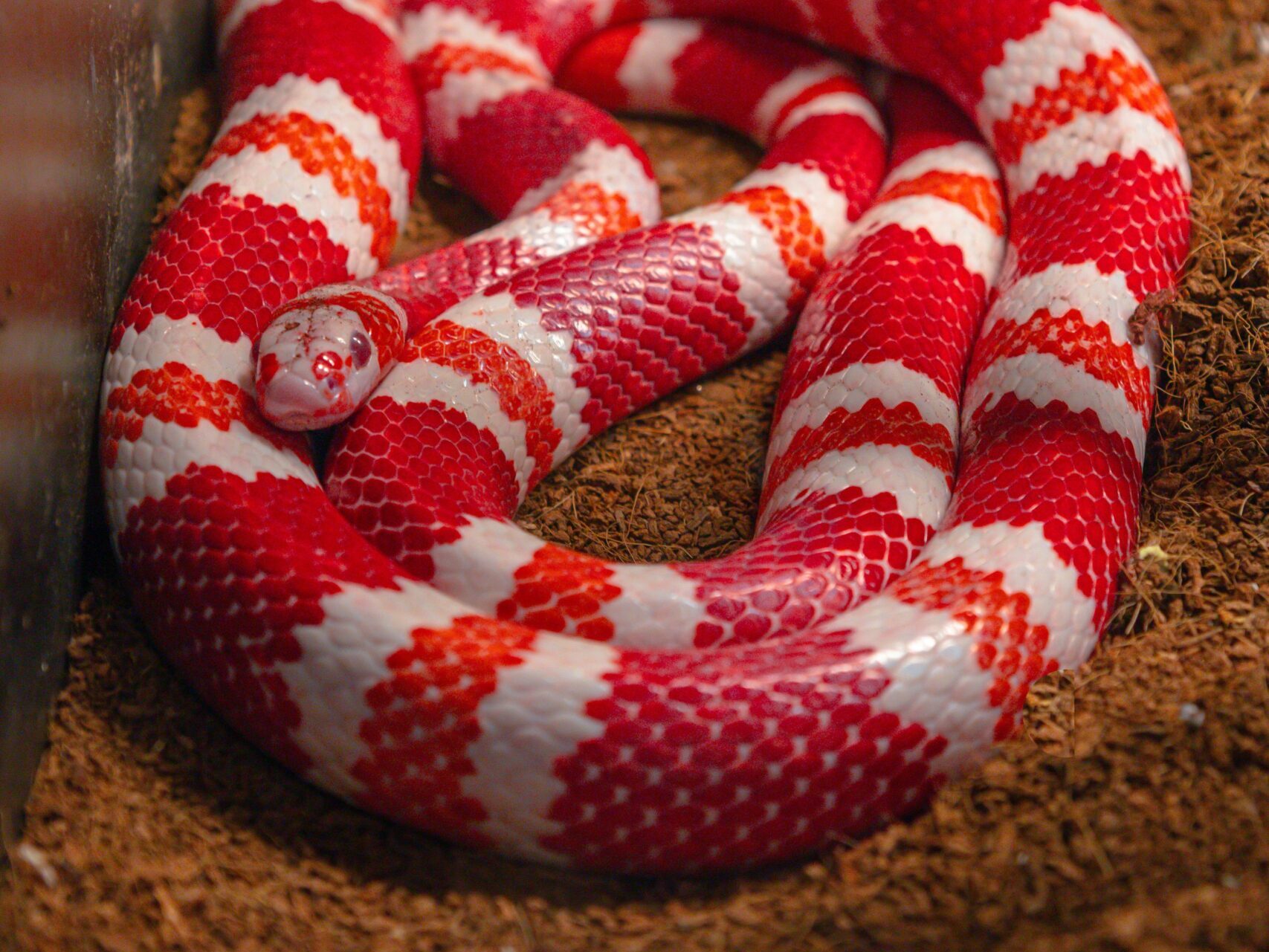
Milk snakes are famous for their smooth, glossy scales and bold, banded coloration—usually red, black, and white or yellow. This pattern is a classic example of Batesian mimicry, as it closely resembles the venomous coral snake. The key distinction: in milk snakes, red bands touch black bands, whereas in coral snakes, red touches yellow. Selective breeding has produced a variety of morphs, including albino, tangerine, and apricot variants.
2. Detailed Husbandry Requirements
2.1 Enclosure Size by Life Stage
Proper enclosure size is critical for both physical and psychological well-being. Milk snakes are active, exploratory, and notorious escape artists, so secure, appropriately sized habitats are essential.
- Hatchlings (0–6 months): 20-gallon tank at a minimum prevents stress from oversized spaces while still allowing you to provide a proper thermogradient.
- Juveniles (6 months–2 years): 50 gallons at a minimum (36″ x 18″ x 18″ H) allows for natural movement and growth.
- Adults (2+ years): Minimum 50-gallon breeder (36″ x 18″ x 18″ H); larger species (e.g., Honduran, Black) may require 120+ gallons or custom enclosures up to 60″ in length.
Key Points:
- Enclosure length should be at least equal to the snake’s full body length.
- Height is important for climbing enrichment, especially for larger or more arboreal subspecies.
- Always provide the largest habitat possible for optimal welfare.
2.2 Humidity Needs and Management
Milk snakes require moderate humidity, with slight variation by subspecies and life stage:
- General Range: 40–60% relative humidity.
- During Shedding: Increase to 60–70% to facilitate complete ecdysis.
- Honduran, Nelson’s, Central American: May benefit from slightly higher humidity (50–70%) due to tropical origins.
Humidity Management:
- Use a digital hygrometer placed mid-enclosure for accurate readings.
- Provide a humid hide lined with damp sphagnum moss or coconut fiber on the cool side.
- Mist lightly as needed, especially during shedding cycles using an electric mister.
- Avoid excessive humidity (>70%), which can predispose to respiratory infections and scale rot.
2.3 Heating and Temperature Gradient
Milk snakes are ectothermic and require a thermal gradient to regulate their body temperature:
- Basking Spot: 85–90°F (29–32°C)
- Warm Side: 80–85°F (27–29°C)
- Cool Side: 70–75°F (21–24°C)
- Nighttime: 66–75°F (18–24°C).
Heating Equipment:
- Supplement heat with a ceramic heat emitter or basking lamp as needed.
- Always monitor with digital thermometers at both ends of the enclosure.
Thermal Gradient:
A proper gradient allows the snake to move between zones for optimal digestion, immune function, and comfort.
Avoid: Hot rocks, heat tape, or heat mats, which can cause burns if not monitored properly.
2.4 Lighting Needs and UVB Requirements
Milk snakes are primarily nocturnal or crepuscular and do not require intense lighting. However, a consistent photoperiod and low-level UVB can be beneficial:
- Day/Night Cycle: 10–12 hours of light daily; use timers for consistency.
- UVB: Low-output UVB (2–5% T5 or T8 tube) is recommended to mimic natural sunlight and promote healthy activity, especially in bioactive or naturalistic setups.
- Lighting Placement: Mount UVB tube at the back of the enclosure, parallel to the thermal gradient, with basking platforms 9–14″ below the bulb (depending on mesh obstruction).
Nighttime:
Use ceramic heat emitters for warmth without visible light to avoid disrupting circadian rhythms.
2.5 Substrate Options and Humidity-Retaining Substrates
Substrate choice impacts humidity, hygiene, and natural behaviors:
- Recommended Substrates:
- Bioactive substrate: Long-term cleanliness, The Bio Dudes Terra Firma option is popular.
- Coconut fiber/husk: Superior moisture retention, supports humidity.
- Cypress mulch: Maintains humidity, naturalistic appearance.
- Aspen shavings: Excellent for burrowing, low dust, easy to spot-clean.
- Paper-based bedding: Easy to clean, ideal for quarantine or mite treatment.
- Substrates to Avoid:
- Pine or cedar: Toxic oils cause respiratory and skin issues.
- Calcium sand, gravel, crushed walnut: Risk of impaction and skin injury.
- Reptile carpet as it gathers bacteria and is difficult to clean or replace
Depth:
Provide 2–3 inches for comfortable burrowing. For bioactive setups, you may also use a mix of topsoil, coconut fiber, and sand.
Maintenance:
Spot-clean daily, replace substrate every 3–4 weeks (aspen) or monthly (coconut/cypress). Deep clean enclosure every 1–2 months. Bioactive substrate can be changed every 1-3 years if prepared properly but ensure you introduce the right clean-up crew such as springtails. Some subspecies of milk snakes are tropical and some are arid so the springtails you introduce will either need to thrive in a tropical environment or an arid one depending on the snakes humidity level. Tropical springtails can be sourced here and arid springtails can be sourced here.
2.6 Enrichment, Hides, and Environmental Complexity
Environmental enrichment is essential for mental and physical health:
- Hides: At least two, one on the warm side and one on the cool side. Hides should be snug, secure, and allow the snake to feel fully concealed.
- Climbing Structures: Branches, cork bark, rocks, and artificial plants encourage exploration and exercise.
- Humid Hide: Essential for shedding; line with damp moss or coconut fiber.
- Visual Barriers: Plants and décor create a sense of security and reduce stress.
- Scent Enrichment: Rotate décor, introduce safe novel scents, and provide foraging opportunities to stimulate natural behaviors.
Rotation:
Change or rearrange enrichment items periodically to prevent habituation and encourage exploration.
3. Dietary Requirements
3.1 Type and Frequency of Food
Milk snakes are obligate carnivores, feeding primarily on rodents in captivity:
- Hatchlings: Pinky mice, every 5–7 days.
- Juveniles: Fuzzy mice, every 7–10 days.
- Adults: Adult mice or small rats, every 10–14 days. Large adults may require larger prey or less frequent feeding.
Prey Size:
Prey should be no larger than 1.5 times the width of the snake’s thickest body section or roughly 10% of body weight. Overly large prey can cause regurgitation or injury.
Dietary Variety:
While mice are the staple, occasional offerings of chicks, quail eggs, or other appropriately sized rodents can provide enrichment and nutritional diversity.
Feeding Method:
Always use thawed, pre-killed prey to prevent injury and reduce parasite risk. Use feeding tongs to avoid accidental bites. Feed in a separate enclosure if using loose substrate to prevent ingestion.
3.2 Water Needs and Soaking Behavior
- Water Bowl: Provide a large, sturdy bowl on the cool side, deep enough for the snake to soak if desired.
- Soaking: Snakes may soak before shedding, to aid hydration, or to relieve mite irritation. Excessive soaking may indicate health issues (mites, dehydration, overheating).
- Water Quality: Change water daily or whenever soiled. Use dechlorinated tap, filtered, or bottled water.
Note:
Remember, snakes do not absorb significant water through their skin; oral hydration is essential. Soaking is primarily for humidity and shedding support, not hydration.
4. Veterinary Necessities
4.1 Routine Care
- Annual Exams: Schedule at least one annual checkup with a reptile-experienced veterinarian; some recommend biannual visits for older or high-risk snakes.
- Physical Exam: Includes weight, body condition, oral and skin inspection, and assessment of husbandry.
- Bloodwork: Complete blood count and biochemistry to assess organ function and detect subclinical disease.
- Fecal Analysis: Screen for internal parasites (nematodes, coccidia, protozoa) via fresh fecal sample and flotation/centrifugation techniques.
Transport:
Use a ventilated, escape-proof container with familiar substrate for stress reduction.
4.2 Parasite Screening and Common Treatments
- External Parasites (Mites):
- Screen visually and with tape tests, especially around eyes, mouth, and skin folds.
- Treat infestations with isolation, povidone-iodine soaks, enclosure disinfection, and veterinary-approved miticides (e.g., permethrin, ivermectin).
- Quarantine new arrivals for at least 30–60 days.
- Internal Parasites:
- Routine fecal exams detect nematodes, coccidia, and protozoa.
- Treat as indicated with appropriate anthelmintics (e.g., fenbendazole, metronidazole, sulfa drugs for coccidia) under veterinary guidance.
Prevention:
Strict hygiene, regular enclosure cleaning, and sourcing prey from reputable suppliers reduce parasite risk.
4.3 Preventive Health Practices
- Biosecurity: Quarantine all new snakes; avoid cross-contamination between enclosures.
- Hygiene: Wash hands before and after handling; disinfect tools and surfaces regularly.
- Environmental Monitoring: Maintain optimal temperature, humidity, and cleanliness to prevent stress-related illness.
- Record Keeping: Track feeding, shedding, weight, and health observations for early detection of problems.
5. Common Health Issues and Mitigation
5.1 Respiratory Infections
Causes:
Improper temperature gradients, excessive or insufficient humidity, poor ventilation, and dirty enclosures predispose to bacterial, viral, or fungal respiratory infections.
Signs:
Open-mouth breathing, wheezing, nasal or oral discharge, lethargy, loss of appetite.
Prevention:
- Maintain stable, species-appropriate temperature and humidity.
- Ensure good ventilation and regular cleaning.
- Avoid overcrowding and stress.
Treatment:
Immediate veterinary intervention with antibiotics, antifungals, or antiparasitics as indicated. Supportive care includes fluid therapy, heat support, and oxygen if needed.
5.2 Mites
Identification:
Tiny black, red, or gray specks, especially around eyes and under scales. Signs include excessive soaking, rubbing, and skin irritation.
Treatment:
- Isolate affected snake.
- Soak in diluted povidone-iodine baths.
- Clean and disinfect enclosure and all accessories.
- Use veterinary-approved miticides.
- Repeat treatments as needed; monitor for recurrence.
Prevention:
Quarantine new snakes, maintain strict hygiene, and inspect regularly.
5.3 Obesity
Causes:
Overfeeding, oversized prey, lack of exercise, and inadequate environmental enrichment.
Signs:
Rounded body, loss of neck definition, lethargy, difficulty shedding.
Prevention:
- Feed appropriate prey size and frequency (adults: every 10–14 days).
- Monitor weight monthly.
- Provide climbing structures and encourage exploration.
Management:
Gradually reduce feeding frequency and portion size; increase enrichment and supervised activity. Consult a veterinarian for persistent weight issues.
5.4 Shedding Problems (Dysecdysis)
Causes:
Low humidity, dehydration, poor nutrition (especially vitamin A deficiency), internal or external parasites, and stress.
Signs:
Retained skin, especially on eyes (retained eyecaps) and tail tip; patchy, incomplete sheds.
Prevention:
- Maintain humidity at 60–70% during shedding.
- Provide a humid hide and rough surfaces for rubbing.
- Ensure balanced diet and hydration.
Treatment:
- Soak snake in lukewarm water for 10–15 minutes.
- Gently remove stuck skin with fingers or damp cloth (never force).
- Seek veterinary care for persistent or severe cases.

6. What to Avoid and Common Mistakes in Milk Snake Care
1. Inadequate Enclosure Size:
Housing in too-small or barren enclosures restricts movement and causes stress.
2. Poor Temperature and Humidity Control:
Improper gradients lead to immune suppression, respiratory disease, and shedding issues.
3. Inadequate Lighting/UVB:
While not strictly required, lack of a consistent photoperiod and low-level UVB can impact activity and welfare.
4. Unsafe Substrates:
Avoid pine, cedar, sand, and sharp or dusty materials.
5. Overfeeding and Obesity:
Feeding too frequently or offering oversized prey is a leading cause of health problems.
6. Handling During Shedding or After Feeding:
Handling during these times increases stress and risk of regurgitation or injury.
7. Cohabitation:
Never house multiple milk snakes together; cannibalism and stress are significant risks.
8. Poor Hygiene:
Infrequent cleaning and failure to disinfect can lead to parasite outbreaks and infections.
9. Neglecting Veterinary Care:
Skipping annual exams or ignoring early signs of illness can result in preventable morbidity and mortality.
10. Inadequate Enrichment:
A barren enclosure leads to boredom, stress, and abnormal behaviors.
7. Subspecies Comparison Table: Care Requirements for Major Milk Snake Subspecies
| Subspecies | Adult Size | Enclosure Size | Temp Range (°F) | Humidity Range | Notable Behavioral Traits |
|---|---|---|---|---|---|
| Eastern | 2–3 ft | 40 gal+ | 75–85 | 40–60% | Shy, burrowing, nocturnal |
| Honduran | 4–5 ft | 40–120 gal+ | 78–88 | 50–70% | Bold, active, good feeders |
| Pueblan | 3–4 ft | 40 gal+ | 76–86 | 40–60% | Docile, vibrant coloration |
| Nelson’s | 3–4 ft | 40 gal+ | 76–86 | 50–70% | Curious, moderate activity |
| Sinaloan | 3–4 ft | 40 gal+ | 76–86 | 40–60% | Active, striking red bands |
| Mexican | 2.5–3.5 ft | 40 gal+ | 75–85 | 40–60% | Secretive, prefers hiding |
| Central American | 3–4 ft | 40 gal+ | 76–86 | 50–70% | Moderate temperament, adaptable |
Table Analysis:
- Eastern Milk Snake: Smaller, prefers moderate humidity and cooler temperatures; shy and burrowing.
- Honduran Milk Snake: Largest, needs spacious enclosure and higher humidity; bold and active.
- Pueblan Milk Snake: Medium size, moderate humidity, and temperature; docile and visually striking.
- Nelson’s Milk Snake: Similar to Pueblan but may require slightly higher humidity; curious and easy to handle.
- Sinaloan Milk Snake: Medium size, prefers moderate humidity; active and visually distinctive.
- Mexican Milk Snake: Smaller, secretive, and prefers hiding; moderate humidity.
- Central American Milk Snake: Medium size, adaptable, and benefits from higher humidity.
8. Subspecies and Taxonomy Overview
Milk snakes (Lampropeltis triangulum complex) comprise over 20 subspecies, with recent taxonomic revisions recognizing several as distinct species. The most commonly kept subspecies in captivity include:
- Eastern Milk Snake (L. t. triangulum): Northeastern and central North America; gray and reddish-brown with saddle-shaped blotches.
- Honduran Milk Snake (L. t. hondurensis): Central America; large, robust, vivid red, black, and yellow/orange bands.
- Pueblan Milk Snake (L. t. campbelli): Southern Mexico; medium size, high-contrast red, black, and white bands.
- Nelson’s Milk Snake (L. t. nelsoni): Central Mexico; red, black, and white/yellow bands, often with albino morphs.
- Sinaloan Milk Snake (L. t. sinaloae): Northwestern Mexico; bright red with wide bands, active and hardy.
- Mexican Milk Snake (L. t. annulata): Northeastern Mexico and Texas; smaller, secretive, coral snake mimic.
- Central American Milk Snake (L. t. abnorma): Southeastern Mexico to Costa Rica; moderate size, adaptable.
Each subspecies exhibits unique coloration, size, and behavioral tendencies, but all share similar core husbandry needs with minor adjustments for temperature, humidity, and enclosure size.
9. Subspecies-Specific Care Summaries
9.1 Eastern Milk Snake
- Adult Size: 2–3 ft
- Enclosure: 40 gallons or bigger for adults
- Temperature: 75–85°F
- Humidity: 40–60%
- Behavior: Shy, burrowing, nocturnal; prefers secure hides and moderate humidity.
9.2 Honduran Milk Snake
- Adult Size: 4–5 ft (occasionally up to 6 ft)
- Enclosure: 120 gallons or bigger for adults
- Temperature: 78–88°F (basking up to 90°F)
- Humidity: 50–70%
- Behavior: Bold, active, good feeders; require climbing enrichment and higher humidity.
9.3 Pueblan Milk Snake
- Adult Size: 3–4 ft
- Enclosure: 50 gallons or bigger for adults
- Temperature: 76–86°F
- Humidity: 40–60%
- Behavior: Docile, vibrant coloration, tolerant of handling; prefers moderate humidity and secure hides.
9.4 Nelson’s Milk Snake
- Adult Size: 3–4 ft
- Enclosure: 50 gallons or bigger for adults
- Temperature: 76–86°F (basking up to 90°F)
- Humidity: 50–70%
- Behavior: Curious, moderate activity, easy to handle; benefits from climbing and basking spots.
9.5 Sinaloan Milk Snake
- Adult Size: 3–4 ft
- Enclosure: 50 gallons or bigger for adults
- Temperature: 76–86°F (basking up to 95°F)
- Humidity: 40–60%
- Behavior: Active, striking red bands, may be more secretive; prefers moderate humidity and secure hides.
9.6 Mexican Milk Snake
- Adult Size: 2.5–3.5 ft
- Enclosure: 50 gallons or bigger for adults
- Temperature: 75–85°F
- Humidity: 40–60%
- Behavior: Secretive, prefers hiding, smaller size; moderate humidity.
9.7 Central American Milk Snake
- Adult Size: 3–4 ft
- Enclosure: 50 gallons or bigger for adults
- Temperature: 76–86°F
- Humidity: 50–70%
- Behavior: Moderate temperament, adaptable, enjoys climbing.
Conclusion
Milk snakes are hardy, beautiful, and rewarding pets when their husbandry needs are met with precision and care. Therefore, success in milk snake keeping hinges on providing a secure, appropriately sized enclosure with a well-maintained thermal gradient, moderate humidity, and ample enrichment. Additionally, a diet of appropriately sized, pre-killed rodents, regular access to clean water, and annual veterinary care form the foundation of preventive health. Furthermore, vigilance for common health issues—respiratory infections, mites, obesity, and shedding problems—enables early intervention and optimal outcomes.
Subspecies-specific nuances—such as enclosure size, humidity, and behavioral tendencies—should inform your husbandry approach, ensuring each milk snake thrives according to its natural history. Lastly, by avoiding common mistakes and embracing evidence-based practices, keepers can enjoy decades of companionship with these remarkable reptiles.
Are you looking to adopt a snake? Consider adopting from your local reptile rescue by using our comprehensive reptile rescue directory today!
Key Takeaways:
- Milk snakes require a secure, spacious enclosure with a thermal gradient (basking 85–90°F, cool side 70–75°F) and moderate humidity (40–60%).
- Feed appropriately sized, pre-killed rodents every 7–14 days, adjusting for age and size.
- Provide at least two hides, climbing enrichment, and a humid hide for shedding.
- Annual veterinary exams, parasite screening, and preventive hygiene are essential.
- Watch for signs of illness—respiratory distress, mites, obesity, and dysecdysis—and act promptly.
- Never house multiple milk snakes together; cannibalism is a real risk.
- Tailor care to subspecies-specific needs for size, humidity, and behavior.
By adhering to these guidelines, you will foster a healthy, vibrant environment for your milk snake, ensuring it not only survives but truly thrives in captivity.
Subspecies Comparison Table:
| Subspecies | Adult Size | Enclosure Size | Temp Range (°F) | Humidity Range | Notable Behavioral Traits |
|---|---|---|---|---|---|
| Eastern | 2–3 ft | 40 gal+ | 75–85 | 40–60% | Shy, burrowing, nocturnal |
| Honduran | 4–5 ft | 40–120 gal+ | 78–88 | 50–70% | Bold, active, good feeders |
| Pueblan | 3–4 ft | 40 gal+ | 76–86 | 40–60% | Docile, vibrant coloration |
| Nelson’s | 3–4 ft | 40 gal+ | 76–86 | 50–70% | Curious, moderate activity |
| Sinaloan | 3–4 ft | 40 gal+ | 76–86 | 40–60% | Active, striking red bands |
| Mexican | 2.5–3.5 ft | 40 gal+ | 75–85 | 40–60% | Secretive, prefers hiding |
| Central American | 3–4 ft | 40 gal+ | 76–86 | 50–70% | Moderate temperament, adaptable |
Sources:
- ©ReptiFiles® — Where Better Reptile Care Begins, reptifiles.com/wp-content/uploads/2021/12/Milksnake-Care-Sheet-PDF.pdf. Accessed 19 Nov. 2025.
- “Milk Snake Care Sheet.” PetMD, www.petmd.com/reptile/milk-snake-care-sheet?utm_source. Accessed 19 Nov. 2025.
- Person, and Zilla. “Husbandry Handbook: Milk Snake – Lampropeltis Triangulum Ssp..” Husbandry Handbook: Milk Snake – Lampropeltis Triangulum Ssp., www.zillarules.com/information/care-sheets/milk-snake?utm_source. Accessed 19 Nov. 2025.
- Supply, Reptile. “How to Care for Your Milksnake.” ReptileSupply.Com, ReptileSupply.com, 19 July 2021, reptilesupply.com/blogs/snake-care-sheets/how-to-care-for-your-milksnake. Accessed 19 Nov. 2025.